What should you know before trading meme coins to avoid losing your whole portfolio?
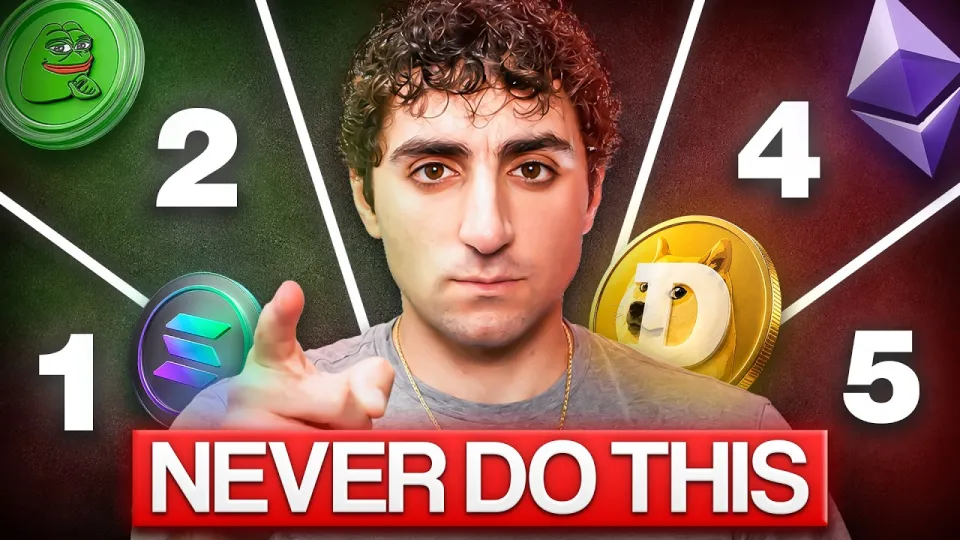
Video: 5 Things I Wish I Knew Before Trading Memecoins (Learn From My Mistakes)
Need articles like this for your video? They help promote it on YouTube and Google — order them in the Telegram bot @sat_sit_bot. Articles with your video embedded are written and posted by the bot itself — on popular topical sites (no ads). Free trial — 50 articles.
Key takeaways
- Meme coins are sentiment-driven tokens with no cash flow, so price is set by attention and liquidity, not fundamentals.
- Most beginner losses come from oversized positions, buying green candles and trading out of boredom rather than from a plan.
- Consolidation after a first leg up is the usual accumulation zone; entries are better confirmed by volume and holder growth than by news.
- Thin liquidity means your own sell order can move the price, so check pool depth and holder concentration before buying.
- Patience is the edge: waiting for a setup beats forcing trades, especially in a bear market.
Meme coin trading is speculation on attention, not investing in a business, so the only reliable edge is risk control: size positions you can afford to lose, buy during consolidation instead of green candles, check liquidity and holder concentration, and accept that most of the time the right move is to do nothing. The trader behind the rasmr channel built a video around exactly this idea — five things he wishes he had known before his first trades — and the lessons map cleanly onto a repeatable checklist you can use before every entry. If you want to trade alongside a community and test these rules with small size, you can start with a registration via fomo.family/r/rasmr_eth.
What a meme coin actually is and why its price moves
A meme coin is a token whose value rests almost entirely on community attention, narrative and liquidity rather than revenue or product. That single fact explains most of its behaviour: there is no earnings report to anchor a valuation, so price is a function of how many people want in, how much they are willing to pay, and how easily they can get out.
The consequences are practical rather than philosophical:
- Narratives rotate fast. A token can double on a single viral post and give it all back within days when the timeline moves on.
- Liquidity is the real ceiling. A small pool means large buys spike the chart and large sells crater it, including your own exit.
- Supply distribution matters more than the chart. If a handful of wallets hold most of the float, they decide when the party ends.
- There is no floor. Unlike a cash-flow asset, a meme coin can fall 90% and keep falling, because nothing obliges anyone to buy it back.
Treat every position as a bet on a crowd's mood with a hard time limit, and the rest of the rules follow naturally.
Why position sizing decides whether you survive
The most common beginner failure is not picking the wrong token — it is putting too much money into the right one at the wrong moment. A trader who risks 5% of a portfolio per idea can be wrong ten times in a row and still be in the game; a trader who goes all-in on one chart is finished after a single bad week.
A workable framework for sizing:
- Decide in advance what a total loss on the position would mean for your portfolio, and keep that number small enough that it does not change your behaviour.
- Split entries: an initial position on a confirmed setup, an add only if the thesis strengthens, never an add just because the price dropped.
- Set an invalidation level before you buy, not after. If the token loses the structure you entered on, the trade is over.
- Take partial profits on the way up. Meme coins rarely give a second chance at the top.
The comment section under the rasmr breakdown is full of the same confession in different words: portfolios lost not because the market was unfair, but because position sizes were too large for the level of conviction.
Why boredom is more dangerous than a bad chart
Many of the worst meme coin trades are opened because nothing is happening, not because a setup appeared. Boredom trading shows up as chasing a coin that is already up 300%, buying a random ticker mentioned in a group chat, or re-entering a token you just got stopped out of to prove a point.
A simple filter before every order: can you state in one sentence why this token should attract new buyers over the next few days? If the answer is "it's moving" or "someone said so", that is a gamble, not a trade. The traders who last treat inactivity as a position — sitting in stablecoins while the timeline pumps is a legitimate, often profitable, decision.
How to enter during consolidation instead of chasing pumps
Consolidation is the phase where a token trades sideways after an initial move, and it is usually a better entry zone than the vertical part of the candle. Buyers who wait for a range to form get a defined risk level — the bottom of the range — instead of buying into a move that can reverse at any moment.
What to check while a token is consolidating:
- Volume behaviour. Healthy consolidation shows declining volume on pullbacks and expanding volume on pushes up.
- Higher lows. A range that keeps making slightly higher lows suggests buyers are absorbing supply.
- Holder growth. A rising holder count during a flat price means distribution is widening, not concentrating.
- Confirmation triggers. A break of the range high with volume, a listing announcement or a genuine catalyst are reasonable confirmations; a random green candle is not.
The question of whether to buy inside consolidation or wait for news has no universal answer — but waiting for confirmation costs you some upside and buys you a much lower chance of buying the local top.
Which risks kill meme coin portfolios
Liquidity and ownership concentration are the two risks that turn a bad trade into a total loss. Before buying any token, check the pool depth relative to your position size: if your order is a meaningful share of the liquidity, you are the exit liquidity for someone else.
A quick pre-trade checklist:
- Pool size and lock status. Thin or unlocked liquidity can be pulled at any time.
- Top holder share. A few wallets holding a large slice of supply can dump on you without warning.
- Contract permissions. Mint, freeze or tax functions let developers change the rules after you buy.
- Age and trading history. A token with days of history has no track record to evaluate.
- Exit plan. Know where you sell, in what size, and into what liquidity.
None of these checks guarantees a profit, but skipping them is how traders end up holding a token they cannot sell.
Common questions new meme coin traders ask
New traders tend to arrive with the same handful of doubts, and most of them are about timing and discipline rather than token selection. Does a good project matter? Rarely as much as the entry price and the size of the position. Should you buy the first green candle? Usually not — the first leg is where late buyers get filled. Is it worth trading during a bear market? Only with reduced size and a clear reason, since attention and liquidity both dry up.
The honest answer to most of these is that the rules matter more than the pick: a mediocre token bought well and sized correctly beats a great token bought at the top with the whole portfolio.
What to take away from rasmr's breakdown
The value of the rasmr video is that it treats meme coin trading as a discipline problem rather than a secret-finding problem. Size small, wait for consolidation, ignore boredom, check liquidity and ownership, and accept that sitting out is a decision. Anyone who internalises those five points will lose less than the average newcomer — and losing less is what keeps you in the market long enough to get good. The channel is worth following for more of this kind of unglamorous, practical advice. When you are ready to put the checklist to work with small size, you can register and trade via fomo.family/r/rasmr_eth.
Questions & answers
How much of my portfolio should I put into a single meme coin?
Only an amount whose complete loss would not change your behaviour or your ability to keep trading. Most experienced traders keep individual meme coin bets small relative to the portfolio and split entries rather than going all-in on one chart, because the failure rate of these tokens is high even when the thesis looks strong.
Should I buy during consolidation or wait for news confirmation?
Consolidation gives you a defined risk level at the bottom of the range, while waiting for news or a volume breakout costs some upside but reduces the chance of buying a local top. A common middle ground is a partial position inside the range and an add only after a confirmed break with rising volume.
Why do so many new traders lose their whole portfolio?
Usually it is position sizing and boredom rather than bad token picks. Oversized bets, chasing candles that are already up hundreds of percent, and forcing trades when no setup exists turn a normal losing streak into a wipeout, especially in a quiet bear market.
What should I check before buying an unfamiliar meme coin?
Check pool depth against your order size, whether liquidity is locked, how much supply the top wallets hold, and whether the contract has mint, freeze or tax functions. Also confirm there is a realistic exit: if you cannot sell your size without crashing the price, the position is too big for that token.
Source: 5 Things I Wish I Knew Before Trading Memecoins (Learn From My Mistakes) · Markdown version